
Dental Clinic · Dentistry
Why Par Levels Fail When Reorder Points Are Too Late
Dental clinic owners and practice managers often assume that if par levels are set correctly, stockouts should not happen. In practice, that is only half the system. A par level can look perfectly...
Dental clinic owners and practice managers often assume that if par levels are set correctly, stockouts should not happen. In practice, that is only half the system. A par level can look perfectly reasonable on paper and still fail if the reorder point is set too late.
That gap creates a familiar problem in the operatory: the team keeps using a dependable item, the shelf looks acceptable for most of the month, and then suddenly the last box is nearly gone. If the next shipment is delayed or the schedule becomes heavier than expected, the room does not just run low. It stops being efficient. Staff spend time checking shelves, borrowing from other rooms, and counting boxes instead of staying focused on patient care.
The issue is not always the par level itself. More often, the problem is timing. Par tells us how much should be on hand. The reorder point tells us when to act. If the reorder point is set too close to zero, the clinic is waiting until the inventory is already vulnerable. That leaves no room for normal delays in shipping, receiving, or usage changes.
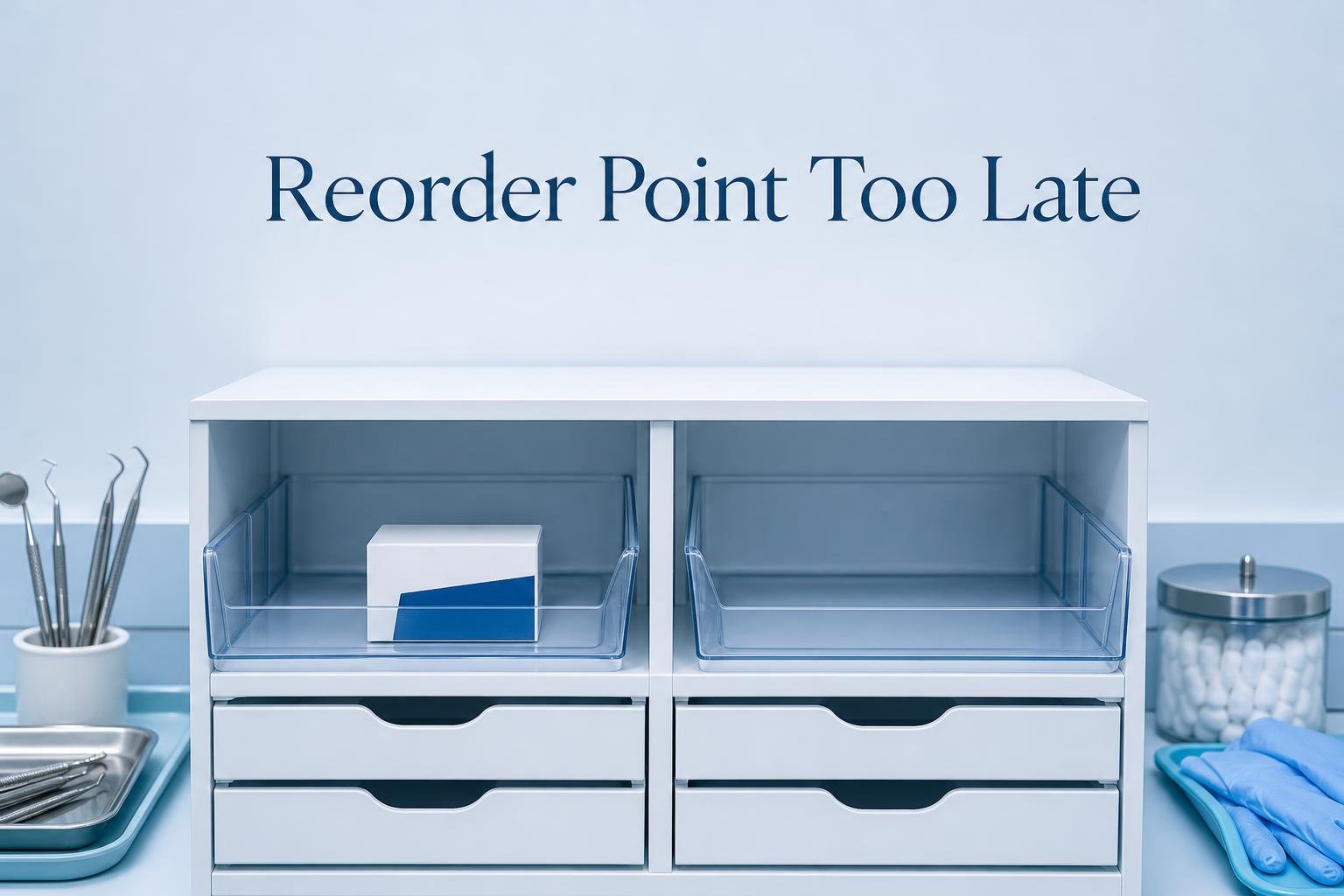
A restorative room makes this easy to see. It may use the same item every week without much variation, which makes the supply feel predictable. But predictable usage does not remove the need for lead time. If the shelf is only refilled when the last box is almost empty, the room is operating on a narrow margin. One late delivery is enough to create a shortage.
For dental clinic inventory management, the better approach is straightforward: set par based on how the room actually uses the item, then set the reorder point early enough for the next delivery to arrive before stock reaches zero. That difference matters because it protects the workflow, not just the spreadsheet.
What a late reorder point costs the clinic
When a reorder point is too late, the cost is not limited to the item itself. The team loses time. The room loses consistency. The practice loses the smooth rhythm that keeps daily operations moving. Even when the item is eventually restocked, the interruption has already happened.
This is why tidy numbers can be misleading. A shelf count that looks clean does not help if it is not aligned with actual use and delivery timing. The goal is not to create the smallest possible inventory. The goal is to keep the right amount on hand at the right time.
That is the practical difference between inventory control and inventory guesswork.
How to think about par and reorder point together
Par and reorder point should work as a pair. Par reflects normal consumption. Reorder point accounts for the time it takes to replace what was used. When those two numbers are not aligned, the clinic may think it is covered while still being one delay away from a shortage.
For busy practices, that means reviewing how each room actually uses supplies rather than relying on a number that was set once and never revisited. It also means building in enough time for the next order to arrive before the shelf is empty. That is especially important for items used regularly in restorative rooms and other high-volume areas.
At Inventooth, we focus on the operational side of dental inventory because the details matter. A supply system should support the team, not create extra work at the exact moment the schedule is full.
A simple standard for better supply control
We recommend a simple standard: use actual room usage to set par, then set the reorder point early enough to absorb routine delays. If the team is waiting until the shelf is nearly empty, the system is too tight. If the reorder point gives enough runway for delivery, the room stays stocked and the workflow stays steady.
That is the difference between a number that looks tidy and a number that actually protects the room. For practices looking to reduce wasted time and avoid unnecessary supply interruptions, this is one of the most practical inventory fixes available.
For more on how we support dental clinic inventory control, visit Inventooth.